
Which AI models does PracticeTherapy.ai use, and why?
OpenAI's gpt-5.6-luna as the judge behind the PracticeTherapy.ai voice coach, GPT Image 2 for the client photos and every video model used for the client videos, with resolutions and common issues.
A language model acts as your voice coach and judges your spoken answers. An image model creates a photo for each simulated client, and video models turn that photo into a client who speaks their line. The voice coach uses ElevenLabs voice agents for transcription and speech.
Which model judges your answers?
The important part here is getting the voice coach feedback just right. It would've been frustrating to criticize a correct response. I used GEPA to optimize prompts for correctness of feedback.
When PracticeTherapy.ai launched, the voice coach judged answers with Google's Gemini 2.5 Flash. Now it runs on OpenAI's gpt-5.6-luna, inside an ElevenLabs voice agent. Anthropic's Claude Sonnet 4.6 was the coach's model before launch. Eight candidate models were compared as the judge on the same real practice answers before the move to gpt-5.6-luna.
At list prices, OpenAI's gpt-5.6-luna shows a 20x price improvement over Claude Sonnet 4.6. gpt-5.6-luna was 97.0% accurate on the example answers that come with the Common Factors and Motivational Interviewing exercises. It also replies about twice as fast as Gemini 2.5 Flash did.
Speed is important because the coach responds in a live voice conversation. Price is important because practice on the site is free. How the coach was tuned and tested is in Can an AI coach judge therapy responses accurately?.
Which model makes the clients' photos?
Each simulated client starts as a photo generated by OpenAI's GPT Image 2 to vary across demographics, such as ethnicity, age, gender and location (Zoom or in-person). Each photo comes from a written prompt built on four choices: gender, age, ethnicity and setting. The setting is either a therapist's office, where the client sits on a two-seater sofa seen from across the room, or a Zoom call from home, where the client is seen through their own laptop webcam.
The written prompts that generate these images all attempt to make the photos look like those of normal, real people. Each prompt specifies "Imperfect skin with visible pores and natural texture" and "Uneven natural room lighting, NOT studio lighting." A photo taken in a therapist's office is to be a "casual amateur smartphone snapshot" while a photo taken during a Zoom session should look like a "webcam screenshot from a laptop video call." Each prompt concludes with "NOT a magazine photo, NOT a professional headshot, NOT a stock photo, NOT a styled shoot." Many of the prompts leave clothing out entirely, so outfits vary the way they do in real life.
The mix is planned. Common Factors, Motivational Interviewing and Trauma-Informed Therapy cast African-American and Asian-American clients, among others; Accelerated Experiential Dynamic Psychotherapy (AEDP) adds Hispanic clients, each with a specific heritage, such as Mexican-American, Puerto Rican or Colombian-American. Clients in the Facilitative Interpersonal Skills course are cast from Portugal's population, in both its English and its European Portuguese versions. Ages range from teenagers to people in their seventies. Clients are women, men and non-binary people. There's a little bit of work making sure random demographics line up with content (e.g., a 16-year-old client isn't believable speaking about their "kids").
New photos pass two checks before a client is filmed with them. The first check is an AI vision check that asks whether each photo looks like a realistic therapy client in a realistic office or on a Zoom call from home. Then Justin approves the photo, rejects it or asks for a change. A rejected photo is retired for good, and an approved photo plays at most one client in a course. More than 1,100 photos have been made this way, and 554 are approved for casting.
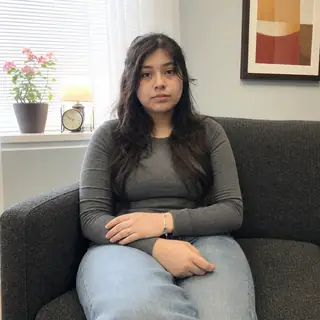
Teenage girl, Hispanic, office 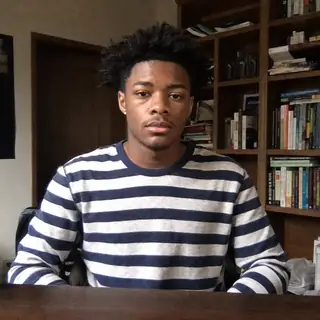
Teenage boy, African-American, Zoom 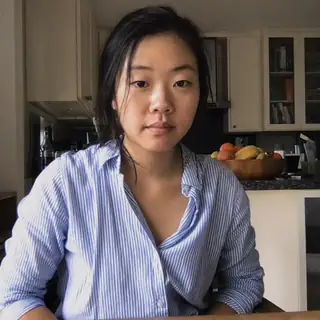
Woman, 20s, Asian-American, Zoom 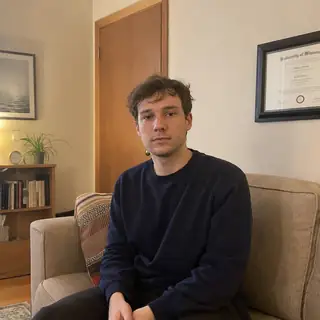
Man, 20s, office 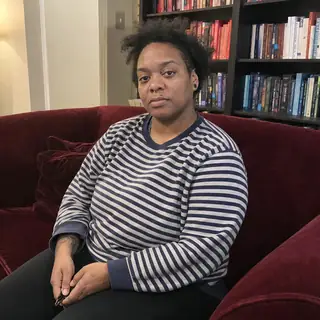
Non-binary, 30s, African-American, office 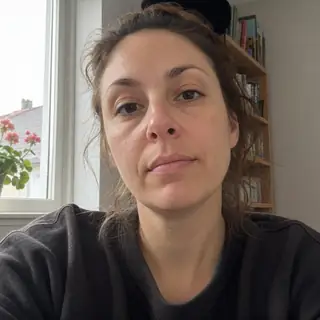
Woman, 30s, Zoom 
Man, 40s, Hispanic, Zoom 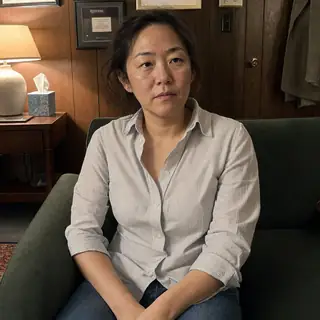
Woman, 40s, Asian-American, office 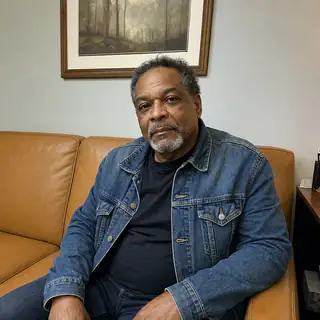
Man, 50s, African-American, office 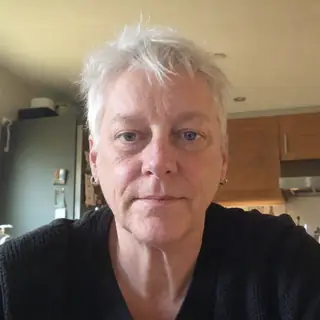
Non-binary, 50s, Zoom 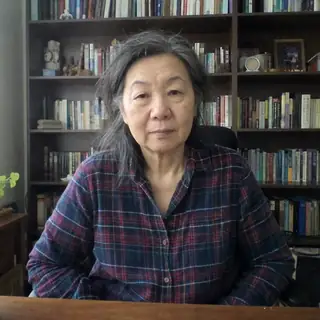
Woman, 60s, Asian-American, Zoom 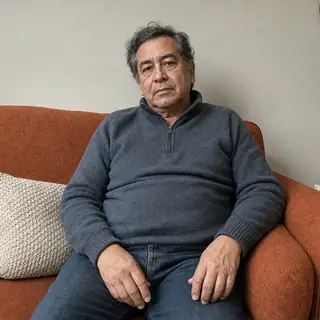
Man, 60s, Hispanic, office
Which video models make the client videos?
Client videos needed non-verbal depth, emotional expressivity, and genuineness. They had to resemble real people so therapists can develop instincts for real clients. A video model animates the approved photo saying the client's line, based on a written performance (the line, an emotion such as sad or frustrated, and directions for the face, voice and body), and it makes the client's voice along with the picture, because dubbing a separate voice onto silent video made the lips drift out of sync.
No single model does everything well, so the newer courses pick a model by how many seconds the client speaks: lines of up to 15 seconds go to HeyGen Video 1 at 2K and lines over 15 and up to 20 seconds go to Flux 3 Max at 1080p (anything from 21 to 30 seconds goes to Seedance 2.5 at 720p). These are the video models the project has used, with the resolutions used and the issues that came up most often:
- Seedance 2.0, by ByteDance, at 1080p, and at 720p in its fast and mini versions. The full model made the first Motivational Interviewing clips, chosen for accurate emotional expressiveness, for example dissociated clients looking away, anxious clients with shallow breathing and angry clients with energized body language. The fast version made the entire Common Factors course at 720p. These were the common issues with Seedance 2.0: clients cried on sad lines that didn't call for tears (we now put "dry eyes" in the prompt unless there are tears in the script); horizontal stripes would run across the face; faces would come out smoothed into an artificial look (especially if the client looked away for a long time); anything in the prompt which looked like dialogue (yes, even the client's inner thought!) would get spoken.
- MiniMax H3 (run three ways: on rented cloud GPUs at 1152x768 resolution, via Pika at 2K, and H3 Max via fal at 1080p) was responsible for the majority of the clips in Trauma-Informed Therapy. On rented GPUs, a single clip took about 22 minutes to generate. Here were the common issues with MiniMax H3: The lip-sync would drift after a single shot went past about 15 seconds. Getting the long lines to sync flattened the emotion, which we had to shift into the voice and the eyes. The voice follows the photo (not the random seed) so when it got it wrong we had to choose a new photo. It spoke the stage directions we wrote into the prompt. Its lip-sync failed often enough that we score every clip. A clip that fails gets one more try with a new photo. If it fails a second time it moves to Seedance 2.5.
- Seedance 2.5 (by ByteDance, run at 720p on Pika) made the longer Trauma-Informed Therapy clips. In the more recent courses, any line between 21 and 30 seconds is generated by Seedance 2.5, because its lip-sync holds on long lines. Now and then a word came out mispronounced. The model also sometimes spoke the delivery cue placed in the prompt right before the line of dialogue it was to say. If the prompt was "softer:" the client would say "softer."
- Flux 3, by Black Forest Labs, at 720p and 1080p through Pika, and Flux 3 Max at 1080p through fal. Flux 3 Max renders lines of over 15 and up to 20 seconds in the newer courses, every English-speaking teenager, and more than half of the AEDP clips. The issues showed up most with the first Flux 3 video model. It would beautify a person's face in a photo into a smooth, model-like version. It gave people odd-looking teeth. It would stretch a line out to fill the video clip rather than hold a requested silence.
- HeyGen Video 1, at 768p and 2K through OpenRouter. It renders lines of up to 15 seconds in the newer courses. HeyGen Video 1 had these problems. At 2K resolution, the skin would shimmer (this is due to its 2K upscaler). 768p was clean, but it would fail with wider shots. The weakest aspect of HeyGen Video 1 was its own voices. It also gave English-speaking teenagers a child's voice (so Flux 3 Max renders them). When given a previous recording of the client as a voice reference, it sometimes said the old line rather than the new one.
Two upscalers (Real-ESRGAN and SeedVR) were also tried, but neither has become a standard step. Regardless of the model used, every client video clip is cropped to the 4:3 aspect ratio of the exercise player and a person reviews every clip.
Which other models help make the videos?
Anthropic's Claude Opus language model writes each performance prompt (in three independent drafts, merged into one by a judging pass). Whenever Claude refused to write a performance for a line that referred to suicide or self-harm, a human confirmed the line and had Google's Gemini language model draft the performance prompt. Beginning with the Common Factors course, each completed clip is automatically checked (and then reviewed by a human). OpenAI's gpt-4o-transcribe model checks that the spoken words match the script. Google's Gemini model checks the clip against a written list of "must" and "must not" rules. And on the newer courses, a lip-sync scoring model (SyncNet) scores the lip-sync.

Common Factors Therapy
Nine relationship skills that every talk therapy shares, practiced out loud with an AI voice coach.
About the author

Sources
- PracticeTherapy.ai coach records: the evaluations behind each change of the coach's judging model (internal).
- PracticeTherapy.ai video production records: the decision notes and review records for each course's client videos (internal).
- PracticeTherapy.ai reference photo records: the photo briefs, approvals and casting pools (internal).